


Categorization:Harness Component
Solution for ultra-thin coaxial cable assembly: A fine coaxial cable solution for engineers and purchasers
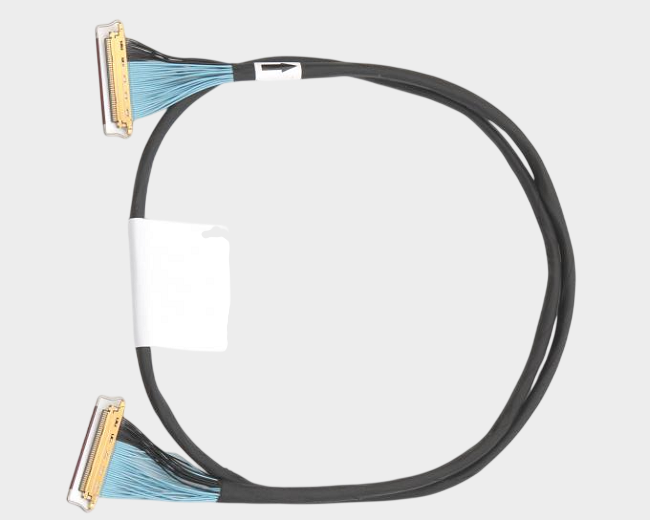
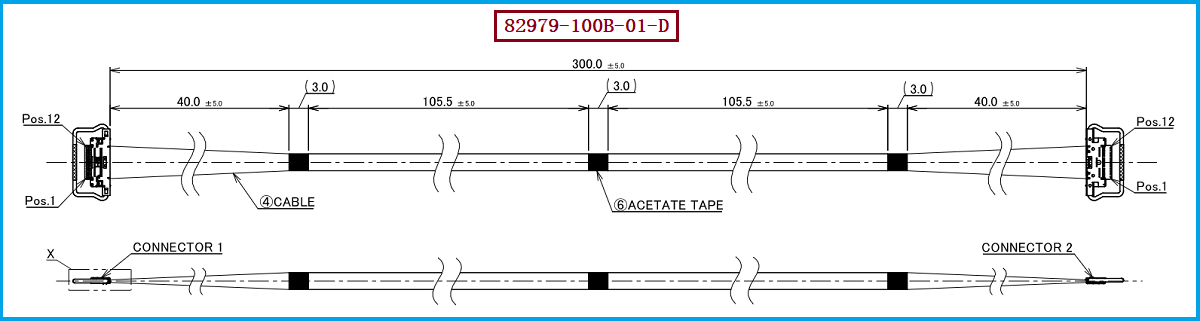
In notebook computers, industrial cameras, AI vision devices, high-resolution display devices, and other high-density electronic products, high-speed signal transmission not only requires cables to have good signal integrity but also needs to consider connector size, wiring space, EMI shielding, and assembly reliability. The I-PEX CABLINE®-CA series belongs to the ultra-fine coaxial connector series with a 0.4mm pitch and horizontal insertion type, and the official data shows that it supports 10, 12, 20, 30, 40, 50, 60 Pin, and can match Micro-Coaxial Cable specifications such as AWG36, 38, 40, 42, 44; among them, the I-PEX official recommended model explicitly lists 82979-100B-01-D: 12Pin, Micro-Coaxial, 40AWG, L=300mm, 1-1 Pin Assignment, and the matching 12Pin Plug Housing model is 20634-112T-02. For engineers and procurement personnel who need to carry out domestication, supply chain optimization, second supplier introduction, or cost improvement, our company can provide I-PEX 82979-100B-01-D compatible alternative ultra-fine coaxial cable solutions. These solutions can be designed and manufactured around 12P, 40AWG, 300mm, 1-1 Pin Assignment, and corresponding connector interface requirements, and further confirm line length, Pin Assignment, wire exit direction, packaging method, and electrical performance requirements according to actual project requirements. It should be particularly noted that the AWG information of the connector you provided includes "36AWG, 8AWG, 40AWG, 42AWG, 44AWG", while the Micro-Coaxial specifications listed in the official I-PEX CABLINE®-CA data are AWG36, AWG38, AWG40, AWG42, AWG44, among which 8AWG is not listed. Therefore, this article understands it as AWG38 according to the official data; when making a formal selection, it is recommended to take the actual connector specification sheet and project BOM as the standard.
Why does a very fine coaxial cable bundle need to be shielded? How to select the commonly used shielding methods?
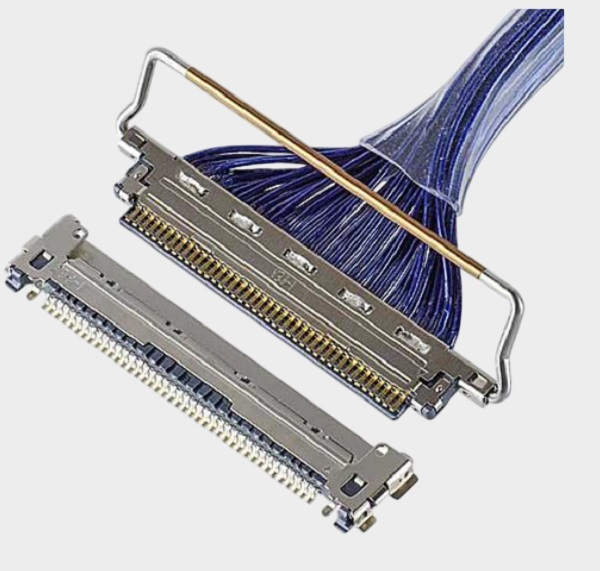
One of the core advantages of extremely fine coaxial cable bundles is that they reduce the risk of high-speed signals being disturbed by external EMI interference through shielding structures, while also reducing the radiation of high-speed signals to surrounding circuits. According to I-PEX documentation, Micro-Coaxial Cable is typically composed of a central conductor, insulating medium, outer metallic shielding layer, and an external sheath, with the outer metallic structure responsible for grounding return current and shielding. From an engineering perspective, the common shielding methods for extremely fine high-speed cable bundles include metallic braid shielding, metallic foil shielding, and composite shielding of foil + braid: braid shielding has good mechanical flexibility and resistance to bending, making it suitable for scenarios requiring frequent bending or dynamic wiring; foil shielding can provide continuous shielding coverage, suitable for applications with high requirements for high-frequency EMI control; foil + braid composite shielding achieves a comprehensive balance between shielding coverage, mechanical strength, and grounding performance. In the true ultra-fine coaxial structure, it is necessary to combine the overall design with wire diameter, impedance, frequency, insertion loss, return loss, bending requirements, and connector end shielding structure, rather than judging the performance of the cable bundle based solely on "whether there is a shielding layer." I-PEX also explicitly points out that the selection of ultra-fine coaxial/dual coaxial cable bundles needs to consider factors such as the maximum operating frequency, available space, EMI shielding requirements, outer sheath/braid method, Insertion Loss, Return Loss, VSWR, and bending, twisting, and pin assignment. In addition, I-PEX's CABLINE® series also adopts shielding and multi-point grounding design, and provides a 360° EMI shielding solution for the connector area, further reducing the interference of high-speed signals to surrounding antennas and other surface mount devices.
Section 3: Selection, Compatibility, and Alternative Solutions Reference and Recommendations
For projects requiring the replacement of 82979-100B-01-D, engineers are advised not to solely rely on the "same 12Pin connector" as the basis for judgment, but should confirm compatibility from six dimensions: connector, cable, Pin Assignment, cable length, mechanical structure, and electrical performance. The current target product can focus on the I-PEX CABLINE-CA 12P Plug Housing 20634-112T-02, with the target cable being 12Pin Micro-Coaxial 40AWG, 300mm, 1-1 Pin Assignment; I-PEX also lists 82978-100B-01-D with 12Pin, 40AWG, 200mm, so in actual projects, if the structural space allows changing the cable length, it can be used as a reference for the same series specification, but it cannot be regarded as completely equivalent to the 300mm model. For cable suppliers to replace, it is more critical to ensure that the connector mating dimensions, terminal position, Pin-to-Pin Mapping, cable diameter, impedance, shielding continuity, and cable shape match the original design; for projects requiring further optimization, it can adjust the AWG, cable length, and shielding/wrapping scheme according to the actual high-speed protocol and transmission distance. I-PEX official information also shows that CABLINE-CA supports various Micro-Coaxial cable diameters and provides different Harness Pin Assignments as well as outer sheathing and binding methods, so engineers can perform targeted design according to PCB Layout and mechanical routing space. For purchasing personnel, it is recommended to require suppliers to provide connector model confirmation, cable AWG confirmation, cable length tolerance, Pin Assignment, appearance dimensions, impedance, and high-speed signal test data during the quotation and alternative material certification stage to reduce the risk of "mechanically insertable but electrical performance mismatch" of replacement. Our company can provide 82979-100B-01-D compatible replacement cable solutions and can customize the manufacture of extremely thin coaxial cables according to customer samples, drawings, or BOM requirements, and conduct engineering verification around connector matching, cable specifications, length, Pin definition, and shielding structure.
Four, Summary: From "Replaceable" to "Verifiable" Ultra-Fine Coaxial Cable Bundle Supply Solution
For high-speed, miniaturized electronic devices, extremely thin coaxial cable assemblies have become more than just ordinary internal connection lines; they are important interconnection components that affect high-speed signal integrity, EMI control, mechanical layout, and overall reliability. Taking the I-PEX 82979-100B-01-D as a target reference model, its core specifications can be summarized as 12Pin, Micro-Coaxial 40AWG, 300mm, 1-1 Pin Assignment, with the cable end equipped with a connector model of 20634-112T-02; the I-PEX CABLINE®-CA platform itself uses a 0.4mm Pitch, horizontal insertion, and mechanical locking structure, and supports various Micro-Coaxial cable diameters. For customers who are engaged in domestic substitution, second supplier development, cost optimization, or supply chain risk control, our company can provide compatible alternative manufacturing services around this specification and further match cable length, AWG, shielding structure, Pin Assignment, and cable assembly wrapping forms based on actual applications. The final selection recommendation should be based on mechanical compatibility, electrical performance, signal integrity, and reliability verification, rather than solely on material numbers or connector appearance.
I am[7A Electronic Network]If you need to select, purchase, develop, or find alternative solutions for extremely fine coaxial cable assemblies, please feel free to contact Manager Yin at any time:18013280527 (WeChat number).
“Without the consent or authorization of this site, no one shall reproduce, reprint, distribute, cite, change, broadcast or publish the content in whole or in part in any form, nor shall there be any other violation of the copyright of this site.