


Categorization:Harness Component
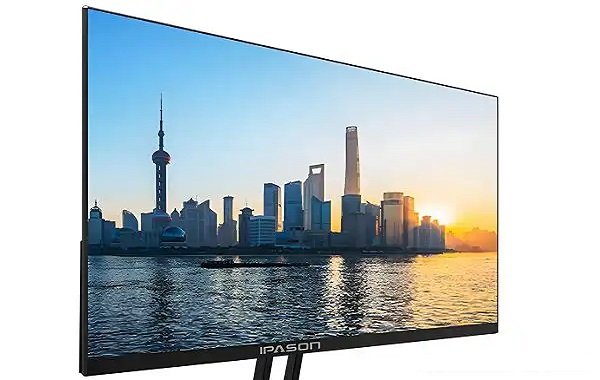
One、High refresh rate puts forward higher requirements for bandwidth
The bandwidth is determined by resolution, refresh rate, and color depth. For example, 4K@60Hz already requires tens of Gbps. Once it is increased to 120Hz, 144Hz, or incorporates HDR, the bandwidth will rapidly multiply. Higher screen specifications mean that the signal transmission lines must have better anti-interference capability, lower loss, and higher bandwidth margin, otherwise, it is prone to unstable images, flickering, or signal interruption.
The advantages and limitations coexist in ultra-fine coaxial beam.
Micro coaxial cable has the advantages of being thin, flexible, suitable for compact wiring, and possessing certain high-speed transmission capabilities, thus it is widely used in notebook and tablet devices. However, in high refresh rate applications, it also faces limitations such as signal attenuation due to bandwidth increase, distance sensitivity, and increased shielding requirements. If the cable design is not rigorous enough, bandwidth insufficiency or a decrease in signal integrity may occur under 4K high refresh rate or higher specifications.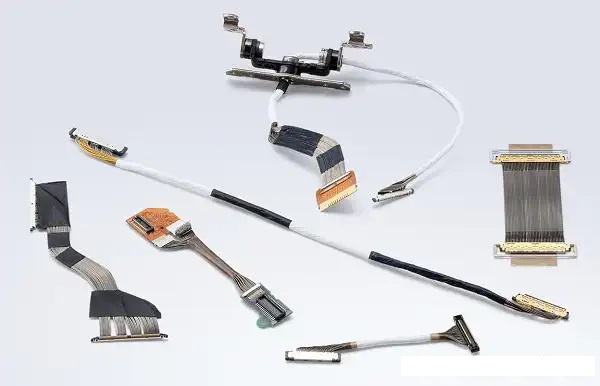
Effective strategies to enhance bandwidth capacity
To better adapt ultra-fine coaxial cable bundles to high refresh rate applications, engineering designs will adopt measures such as shortening transmission distance, enhancing shielding structures, strictly controlling impedance, and improving overall bandwidth capability through multi-channel parallel transmission. At the same time, modern display solutions will also combine visual lossless compression technology to carry higher data volumes within limited bandwidth, thereby providing stable and reliable image output for high refresh rate devices.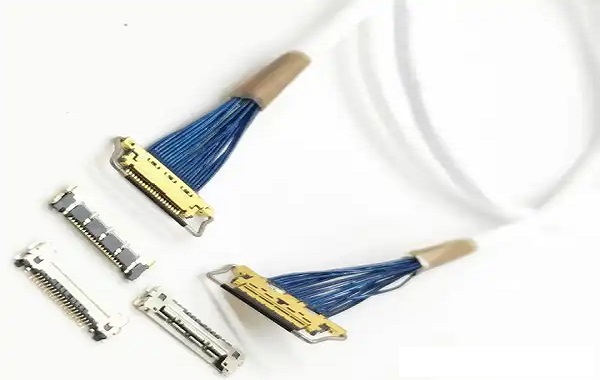
“Without the consent or authorization of this site, no one shall reproduce, reprint, distribute, cite, change, broadcast or publish the content in whole or in part in any form, nor shall there be any other violation of the copyright of this site.